

Chores for 11-Year-Olds
Eleven-year-olds can handle serious household responsibility, here are daily and weekly chore lists, time guides, and motivation tips for busy preteens.

Your eleven-year-old has opinions about everything, playlist curation, hoodie physics, and whether your chore expectations are " literally unfair." Meanwhile the laundry hamper is a structural support column for clothes they swear they'll put away "in a minute."
Eleven sits in the stretch between kid and teen: old enough for real trust, young enough to need guardrails. The goal isn't perfect compliance, it's reliable contribution without you becoming the household reminder app.
Building from ten? See chores for 10-year-olds. At eleven, we're assuming basics exist and leveling up independence.
What 11-year-olds can handle
Eleven-year-olds can plan ahead, use appliances safely after training, and complete multi-step projects if the outcome is clear. Many juggle school, activities, and social life, chores must fit the calendar or they'll slide.
Good fits:
- Independent laundry including stains pretreat (with guidance)
- Cooking simple meals and full cleanup after
- Deep bathroom cleaning
- Vacuuming, mopping, dusting multiple rooms
- Managing trash and recycling for the week including bin night
- Babysitting younger siblings for short windows while you're home
- Yard maintenance: mowing with supervision, seasonal cleanup
- Organizing shared spaces: entryway, pantry shelf, game closet
- Running errands inside the home: restock bathroom supplies, fold communal laundry
Support still needed:
- Breaking big cleans into steps ("closet quest" not "fix this disaster")
- Flexibility on heavy homework or travel days, swap weekly, don't skip forever
- Fair rotation when jobs are universally hated
Daily chores for 11-year-olds
Anchor chores to existing routines so they survive busy weeks.
Morning
- Bed, room, and personal space to baseline standard
- Self-sufficient breakfast or lunch prep
- Pet responsibilities completed before school
- Verify activity gear is packed
After school
- Reset backpack, coat, shoes
- Snack prep and cleanup
- 10-15 minute zone clean (their room or assigned shared area)
Evening
- Dinner help: cook, set, clear, or dish cycle, rotate roles
- Kitchen wipe-down or sweep as assigned
- Pack tomorrow's bag; charge devices in agreed spot
- Laundry progress if today is their wash day
Weekend daily minimum: bed, personal dishes, pet care, even when "daily" chores flex, something stays consistent.
Typical daily time: 25-30 minutes: split across day.
Weekly chores for 11-year-olds
Weekly jobs should feel like real ownership of part of the house.
- Full bathroom clean (the one they use or rotate)
- Vacuum and mop assigned zones
- Wash, dry, fold, put away all personal laundry
- Change bed sheets and towels
- Grocery support: list, shop aisle, put away
- One family meal cooked start to finish
- Outdoor maintenance as season requires
- Deep organize one area (closet, desk, sports gear)
Assign 3-4 weekly tasks; quality over quantity.
How many chores, and how long?
| Category | Count | Time |
|---|---|---|
| Daily | 4-5 tasks | 25-30 min |
| Weekly | 3-4 jobs | 60-90 min per week |
Middle school may compress weekday time, shift heavier jobs to Saturday "raid day" instead of dropping them.
Cross-check family balance with the ultimate guide to chores by age. Eleven-year-olds notice hypocrisy fast.
Motivation without yelling (preteen edition)
Eleven-year-olds negotiate like small lawyers. Volume won't win; structure, respect, and real stakes will.
Effective approaches:
- Written quest contract. Agreed list, signed off together, visible somewhere neutral.
- Autonomy slots. They choose weekly job mix from approved options.
- When-then freedoms. Screens, rides, friend time unlock after quests, same rule every day.
- Skill prestige. "You're lead chef Thursday" beats "help with dinner."
- Streak bonuses. Extra stars for seven-day completion, see best reward ideas for kids for non-cash options.
- One redo rule. Calm correction once; natural consequence if ignored (missed activity time, not rage cleaning).
Avoid:
- Public shaming in front of friends or siblings
- Weaponizing chores in unrelated conflicts ("No chores, no birthday party" from last month's fight)
- Infinite task expansion ("since you're up...")
- Zero flexibility on brutal weeks, flex builds trust; chaos builds sneakiness
If they say it's unfair, audit the facts. Sometimes they're right.
Next up: age 12
Twelve opens the door to teen-level jobs with training. When eleven feels stable, read chores for 12-year-olds to prep, not to rush.
Quest framing for eleven
Preteens roll their eyes at baby talk but still love progress they control:
- Daily core quests: bed, dishes, pet, zone tidy
- Weekly raids: bathroom, floors, laundry, one meal
- Seasonal boss battles: garage clean, closet purge, holiday prep
- Chosen rewards: defined upfront in StarKid or your family system
StarKid keeps quests, stars, and rewards in one place, so the rules aren't whatever mood you're in at 6 PM. They see progress; you stop repeating yourself. Soft landing: let them help pick rewards this month so the system feels partly theirs.
Eleven is training wheels for teen responsibility. Clear jobs, fair load, visible wins, that's the whole game.
Eleven-year-olds don't need you to win the argument. They need a system that respects their time and proves contribution earns trust.
Frequently asked questions
Expect 4-5 daily responsibilities and 3-4 weekly tasks, about 25-35 minutes on a normal day. Middle school schedules may require shifting weekly jobs to weekends.
Related articles

Chores for 10-Year-Olds
Chore ideas for ten-year-olds that build real life skills, daily routines, weekly jobs, fair time limits, and motivation that doesn't depend on nagging.
Read article →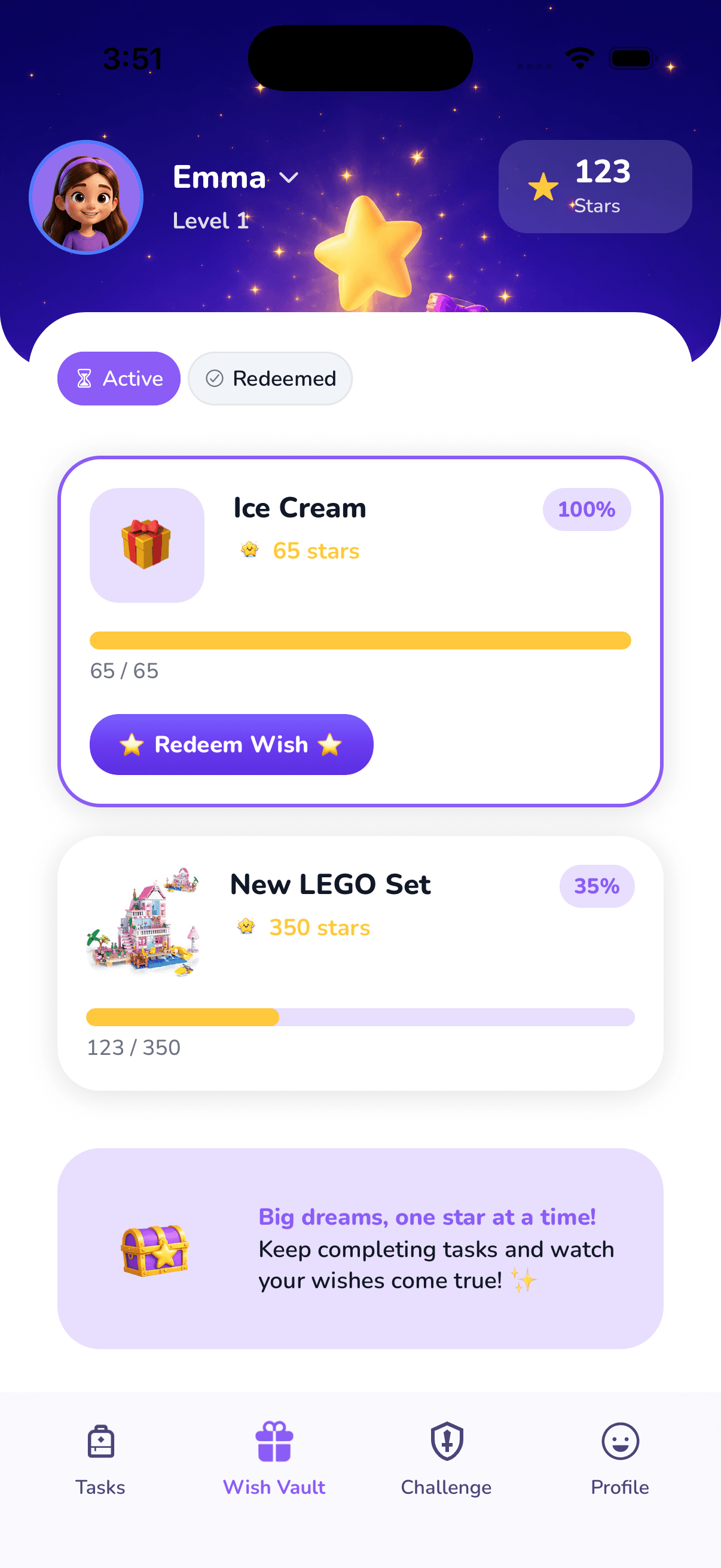
Chores for 12-Year-Olds
Twelve-year-olds are ready for teen-level household jobs, daily routines, weekly responsibilities, fair expectations, and motivation that builds trust before the real teen years.
Read article →
Best Reward Ideas for Kids
Reward ideas kids actually want, non-cash treats, experience rewards, and money-adjacent options that motivate without spoiling.
Read article →Ready to turn chores into adventures?
StarKid tracks chores, rewards, and streaks automatically—so your family builds habits without the daily battles.